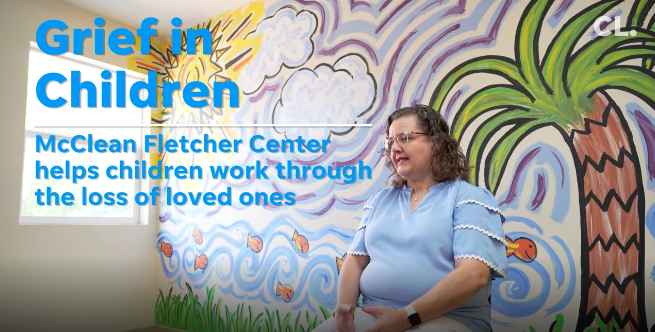
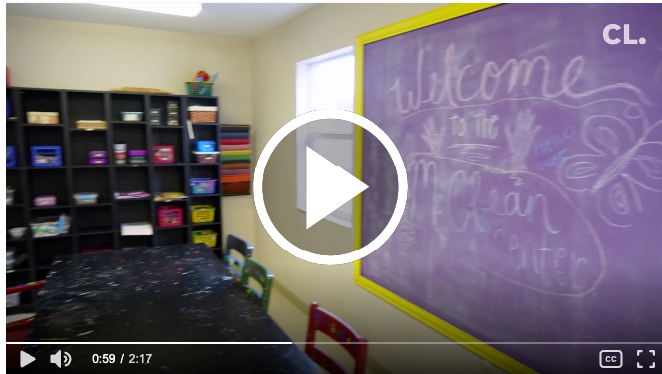
The Clarion Ledger featured the McClean Fletcher Center in this video and article on the importance of grief in our community. You can read the full story below or online at the Clarion Ledger.
Watch The Video
How kids feel impact of Jackson crime, gun culture and death — and ways to get help, hope
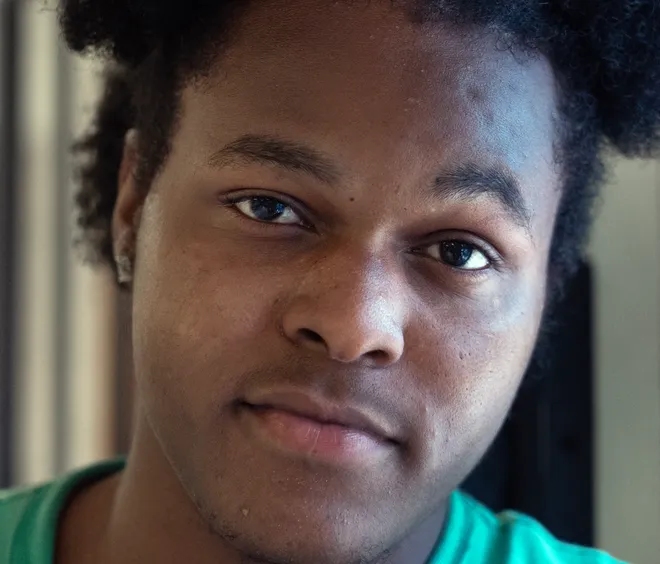
On Capitol Street in West Jackson, Jaylin O’Quinn would stand in the yard of his family home with his attentive eyes watching as people sprinted along the street — not in a playful race or a game of tag, but with guns clutched tightly in their hands. Sounds of gunfire consistently echoed. He was only in the first grade.
From elementary to middle school, O’Quinn accepted that crime and violence in the city was normal — it was all he had ever seen. By high school, O’Quinn transitioned from an observer to a participant in crime.
At the time, O’Quinn took psychiatric medications. Frustrated with how they made him feel, he had warned his doctor: “take me off them, or I’ll start selling them.” One day, he handed off two Seroquel pills to a peer, who was later caught with them. The supply trail led back to O’Quinn, dismantling his “operation.”
Expelled from school, O’Quinn faced the disappointment of his father, whom he affectionately called “Pops.” His dad, who had been incarcerated for the first 12 years of O’Quinn’s life, had hoped for better for his son.
By age 21, O’Quinn’s life took another turn when he witnessed the death of his best friend — a person he had known his entire life, a brother in every sense but blood.
“It kind of made me see the bigger picture firsthand,” O’Quinn said, referring to the emotional toll of violence. “You done always seen it, but when it happen to you firsthand, it strikes different for real. It strike different.”
Gun violence continues to plague Jackson and Mississippi’s youth, leaving deep emotional scars long after the shots fade. While some local organizations strive to steer youth away from crime, resources to help youth process their trauma remain scarce.
A 2025 data model by Judi’s House/JAG Institute — in partnership with the New York Life Foundation — named the Childhood Bereavement Estimation Model reports that 1 in 8 children (85,000) in Mississippi will lose a parent or sibling by age 18 — a 12.5% rate that surpasses the national average of 8.9% and places the state third in childhood bereavement, behind only New Mexico and West Virginia respectively.
Data further shows that approximately 201,000 youth will experience such loss of a loved one by age 25. Homicides account for one of the top five leading causes of death for each age group in the state.
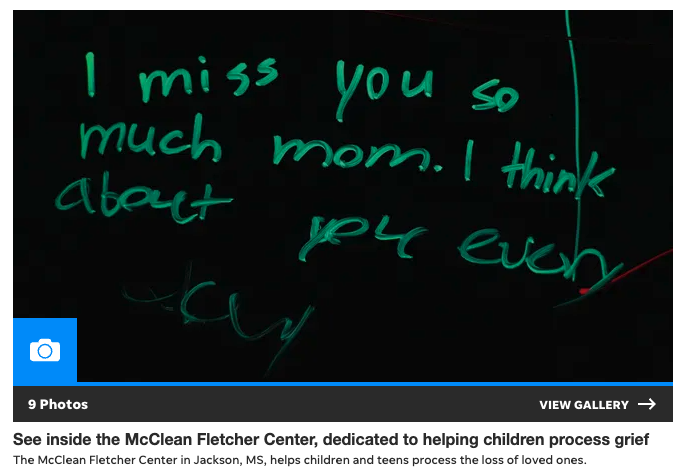
“The death of a parent, sibling or other important person in a child’s life is one of the most frequently reported disruptive infantile experiences and without appropriate support, can adversely affect lifelong health and well-being,” the report states.
For O’Quinn, the experience of loss and trauma has been turned into a catalyst for change.
O’Quinn, who will turn 23 on Aug. 18, now works with Operation Good Foundation, a community-based nonprofit organization in Jackson focused on stopping recidivism by preventing and intervening in violence. O’Quinn credits the organization with helping him leave a life of crime behind and encouraging other young people to follow suit.
From that initiative, O’Quinn earned a construction certification through West Jackson Community Development Corporation in Raymond. He also earned a welding certification with Delta Tech College in Ridgeland. O’Quinn intends to go back to school to become a mechanic.
“I’m really proud of myself,” O’Quinn said. “And I be trying to show them that it’s the same way (for them). If I can do it, I know they can.”
Breaking the cycle of trauma
One person guiding O’Quinn in his journey is Fredrick Womack. Womack in his official title is Executive director of Operation Good Foundation, but his true role is that of a servant that is dedicated to helping youth escape the grip of crime and discover a path toward healing.
I recall an incident — when we first got started out here — where a young man got his brain blown out,” Womack said. “And when he got his brain blown out, all the youngsters in the community surrounded the guy. Instead of them being grossed out by the scene, they were eating hot dogs, potato chips, drinking drinks, talking and playing like it was just another day at the park.”
That was the moment Womack said he knew he had to work with Jackson’s youth.
For more than a decade, Operation Good Foundation has worked with high-risk Black families, helping to prevent young people from entering and re-entering the prison system. The organization has been involved in everything from neighborhood clean-ups and feeding communities during COVID-19 to its current role as a violence interruption organization.
The intervention strategy is simple but “powerful”. It only takes a second to interrupt the mindset of an assaulter and save a life. Members of the organization — many with lived experiences — step in to recognize the warning signs of crime and act fast. They stop people and ask questions. In that brief moment, they aim to change the course of someone’s thoughts, potentially preventing violence.
“The truth is these babies here, they grew up fast,” Womack said. “They went from playing with Tonka Toys to running around with a ski mask on and an AK-47 in their hand. There’s no in between.”
Womack often witnesses the lasting trauma of violence on young people, what he calls “the moment of silence.” It’s the quiet pain that lingers, like a soldier’s post-combat flashbacks. The moments of solitude, the dark room, the haunting memories — it all takes a toll, Womack said.
“They never have a chance to process the last incident before the next incident happens. Now that’s just trauma on top of trauma on top of trauma, not to mention the transfer of trauma that happens from generation to generation,” Womack said.
The organization, Womack said, focuses heavily on root causes of violence, noting that the city’s population is more than 80% Black, that one in four residents live below the federal poverty line and how there are “many” single-mother households. All of that factored in together “culminated” for a “violent situation” — robbing, stealing and killing.
Womack said the organization supports single mothers by helping high-risk youth in their households find employment and access job-skills training.
“We really want to heal the problem with the inner community, not throw a bandage over it,” Womack said. “… We call it changing the environment to change the mindset.”
Womack emphasized the need for economic development in Jackson, urging leadership to build swimming pools, healthy food markets and shops. He said that many youths, lacking opportunities and guidance, turn to crime for “entertainment” and need support.
“When they see somebody do care about them, which it’s not going to be the magic pill, it’s going to start chipping away at all the harshness that they have witnessed in their lives,” Womack said.
Grief support is scarce but provided
Addressing grief among Jackson’s youth can be a daunting task as much-needed support is scarce. The first and only grief support program in the state for children and teens, ages 4-18, who have lost a loved one, is in Jackson at the McClean Fletcher Center.
According to the center’s data, homicides — documented as violent deaths — accounted for 12% of deaths treated in the past three fiscal years. In 2025, sudden deaths and natural causes were the most common, at 39% and 34%, respectively.
Jennifer Goodwin, executive director of the McClean Fletcher Center, said it is important for families to continue honoring the memory of their loved ones by marking birthdays, anniversaries or the date of their passing, while also figuring out what works best for them.
“Grief will manifest itself, if we are not having a safe place to be able to talk about it and share our thoughts and our feelings,” Goodwin said.
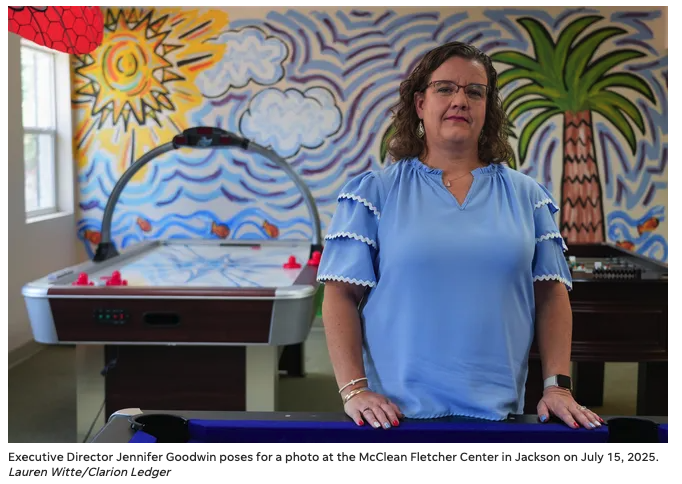
The McClean Fletcher Center opened in 1999 under Kathy Woodliff, who was stirred by her own childhood trauma of losing her mother at 8 years old. Woodliff later met John Fletcher, whose daughter McClean died in a car accident at age 19. Together, Woodliff and Fletcher felt called to create a resource center for grieving children. The center soon after began as an extension of Hospice Ministries in Ridgeland and was named in McClean’s honor. In 2023, when Hospice Ministries was sold, the center quickly became its own non-profit.
The center provides free services funded by donations and grants to 100-140 children annually, ages 4-18, who have experienced a death. With 50 volunteers during the school year, the center is working to expand its reach. Bi-weekly sessions start with a provided meal for families, staff and volunteers, followed by age-appropriate activities for children and teens, including discussions, art, music, games and journaling, while adult caregivers meet separately.
In the 2024-2025 school year, 42% of the center’s children (39) were from Hinds County, 37% (34) from Rankin County, and 13% (12) from Madison County.
Goodwin said that younger children at the center often show “regression,” seeking comfort by sleeping with family members or reverting to baby talk. For older kids and teens, they may suppress their emotions, leading to declining grades, inattentiveness or inappropriate behavior online. All actions the center aims to help the individual work through.
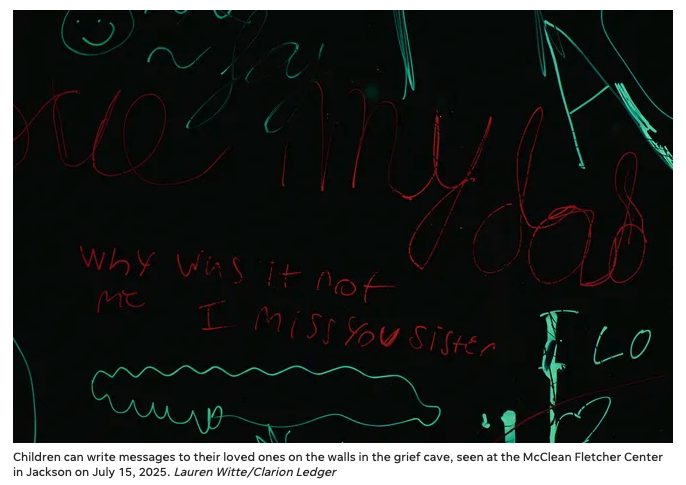
Goodwin said she finds joy in seeing past participants thrive and become “resilient,” recalling a moment during a balloon release when a former participant texted her.
“He said, ‘I’m sitting here at work watching the balloons go over the building. I just want you to know what the McClean Fletcher Center meant to me and how impactful it was to me,” Goodwin said. “Everyone will experience a death. And some of our kids experienced it a lot earlier than others in life, but they grow up to be successful adults and can move on with their lives.”
To contact Operation Good, reach out by phone at (769) 610-8296. To contact the McClean Fletcher Center, reach out by phone at (601) 206-5525.
Pam Dankins is the breaking news reporter for the Clarion Ledger. Have a tip? Email her at pdankins@gannett.com.